

For research
From research question to defensible conclusion.
Keep your papers, data, lab notes and drafts in one project, and turn them into chapters, papers and talks you can stand behind.
01Built for the way research actually goes
Less wrangling. More finding.
URIQA takes the parts of research that eat your weeks, and gives you back the part you came for.
01
Tame the literature.
Hand an agent your question and let it search and review the literature, with every source and decision on the record.
02
Make your data talk.
Ask questions of spreadsheets and instrument exports. URIQA runs the numbers instead of guessing, and plots the answer.
03
Catch it before your advisor does.
An outlier cell, a glitching sensor, a number in your notebook the data doesn't support: URIQA flags it before you build on it.
04
Know what you've actually shown.
Findings and the Insight Map make plain which hypotheses your evidence supports, which it contradicts, and what is still open.
05
Write it up with the receipts.
Draft chapters, papers, advisor updates and lab-meeting decks from your evidence, with citations already in place.
06
Hand it on.
Give your advisor, or the next student on the project, the whole thing: files, findings, maps and drafts, not a folder of loose files.
02A worked example
One study, start to finish.
Sixteen pouch cells, four electrolytes, two temperatures, a thousand cycles, and one decision to make: which electrolyte goes into the 5 Ah prototype.
01 · Ask
Ask the data. Get the math.
Rank four electrolytes by capacity retention at 25 °C and 45 °C. URIQA computes it from the cycling workbook, leaves out the reference cycles and the rebuilt cell as asked, and cites the sheet behind every number.
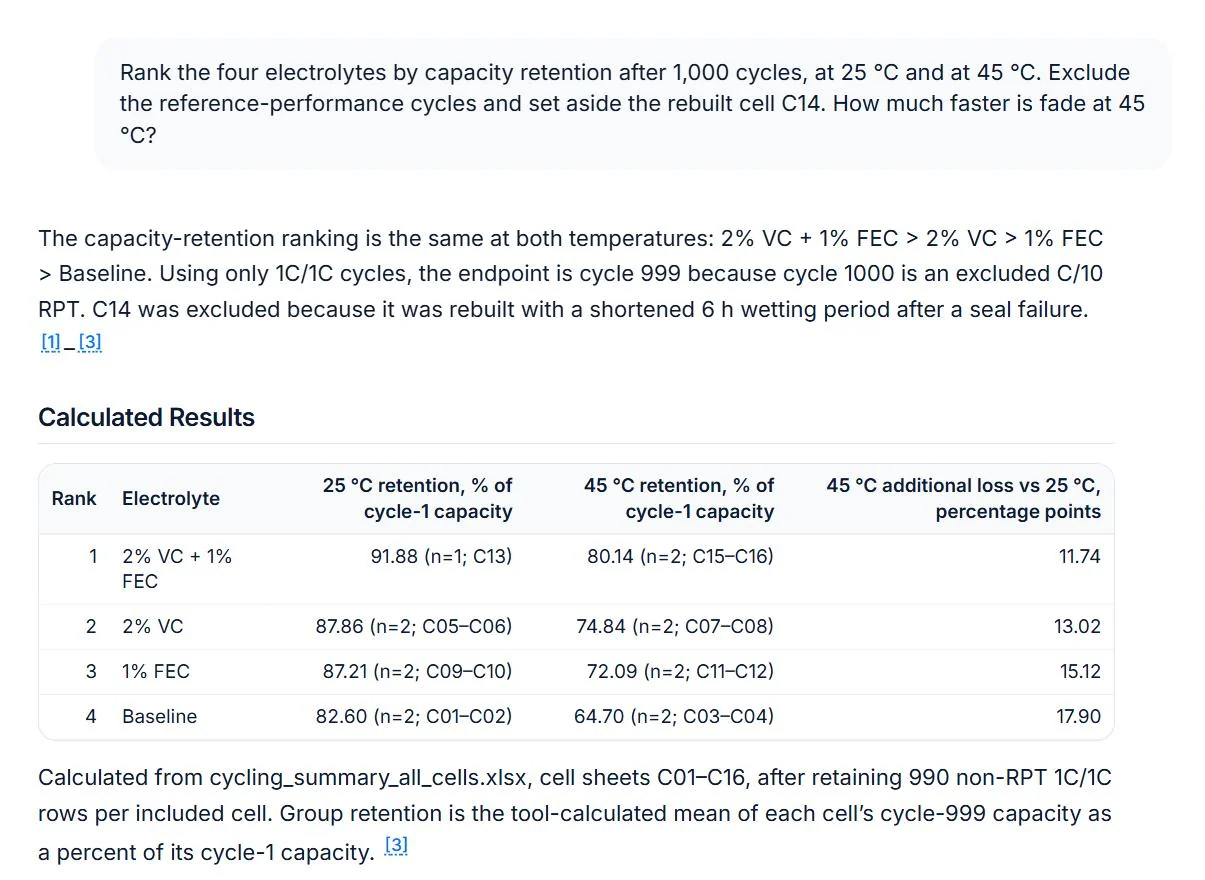
Calculated from the project's own workbook, not estimated. 02 · Check
The notebook said 95%. The data said 91.9%.
URIQA checks claims in your notes against the data and files what it finds as findings. Anything the AI drafted stays marked for review until you accept it.
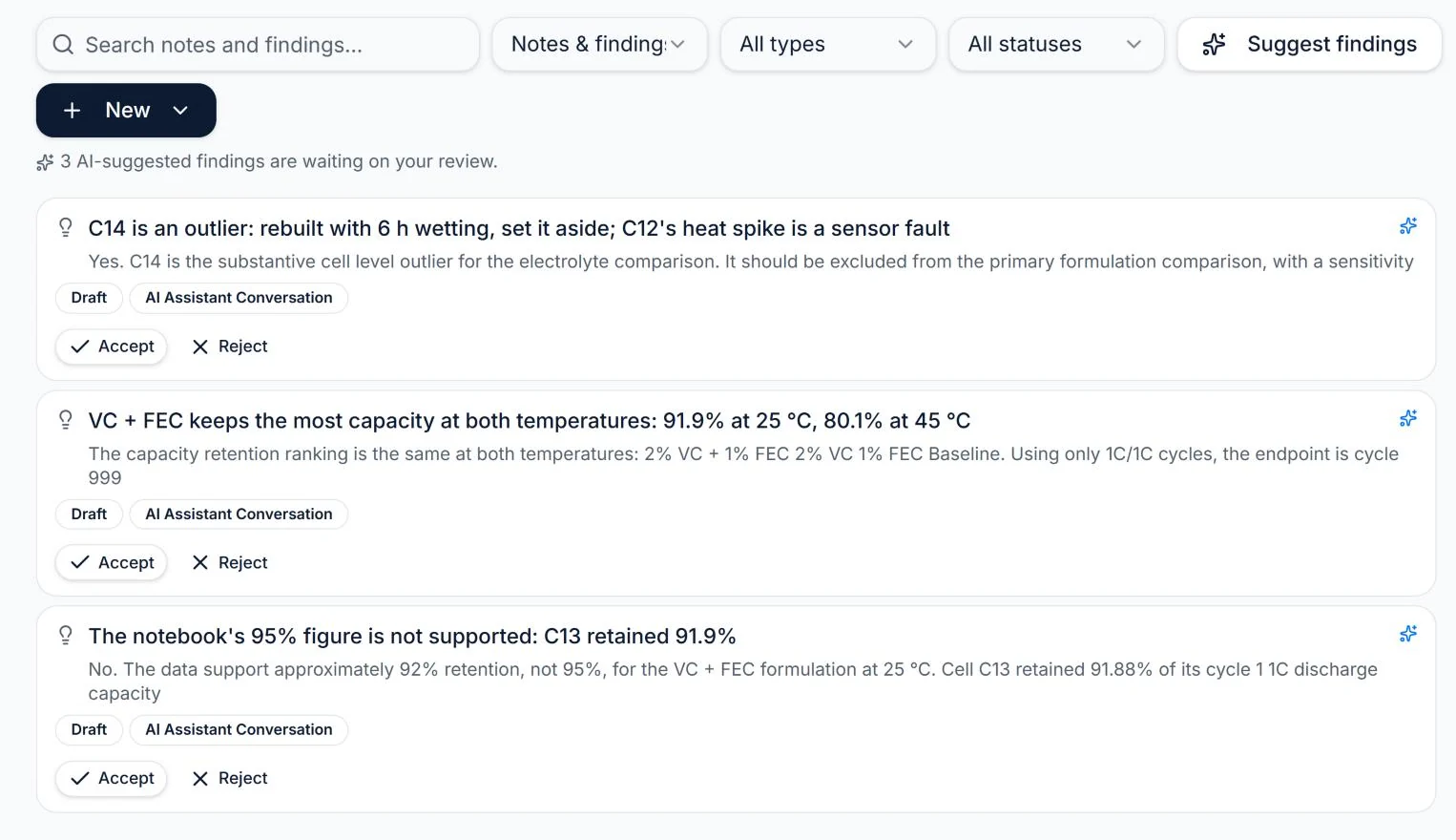
Three findings, drafted from the analysis, waiting on the researcher's call. 03 · Reason
See which hypotheses survive.
The Insight Map links each finding and record to the hypotheses it supports or contradicts. Two hypotheses survive, two don't, and every verdict shows the evidence behind it.
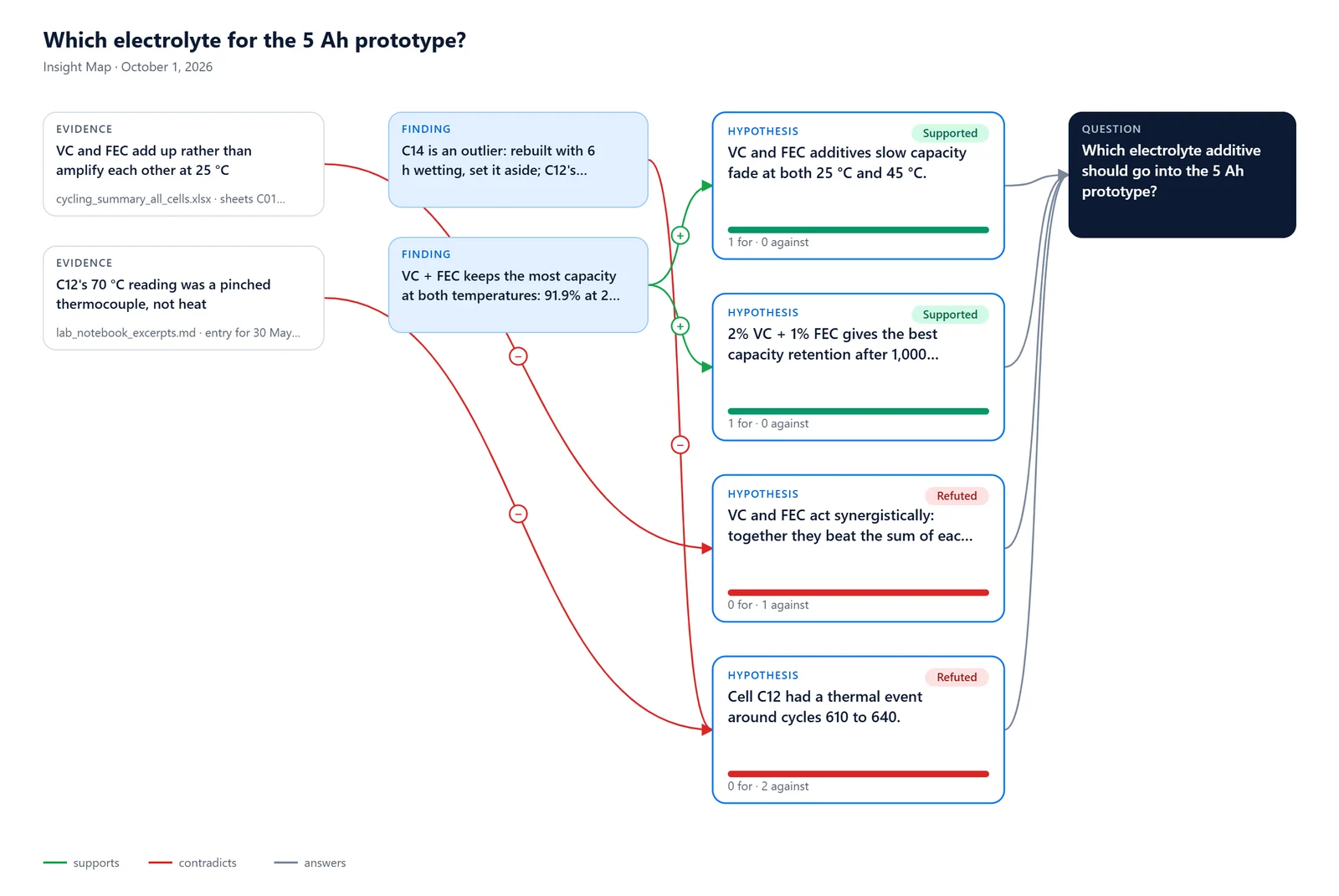
Exported straight from the map, ready for a report or a slide. 04 · Deliver
Present the decision, receipts included.
Draft the review deck and the final report from the same evidence. Slides and paragraphs keep their citations, and the deck exports to PowerPoint or PDF.
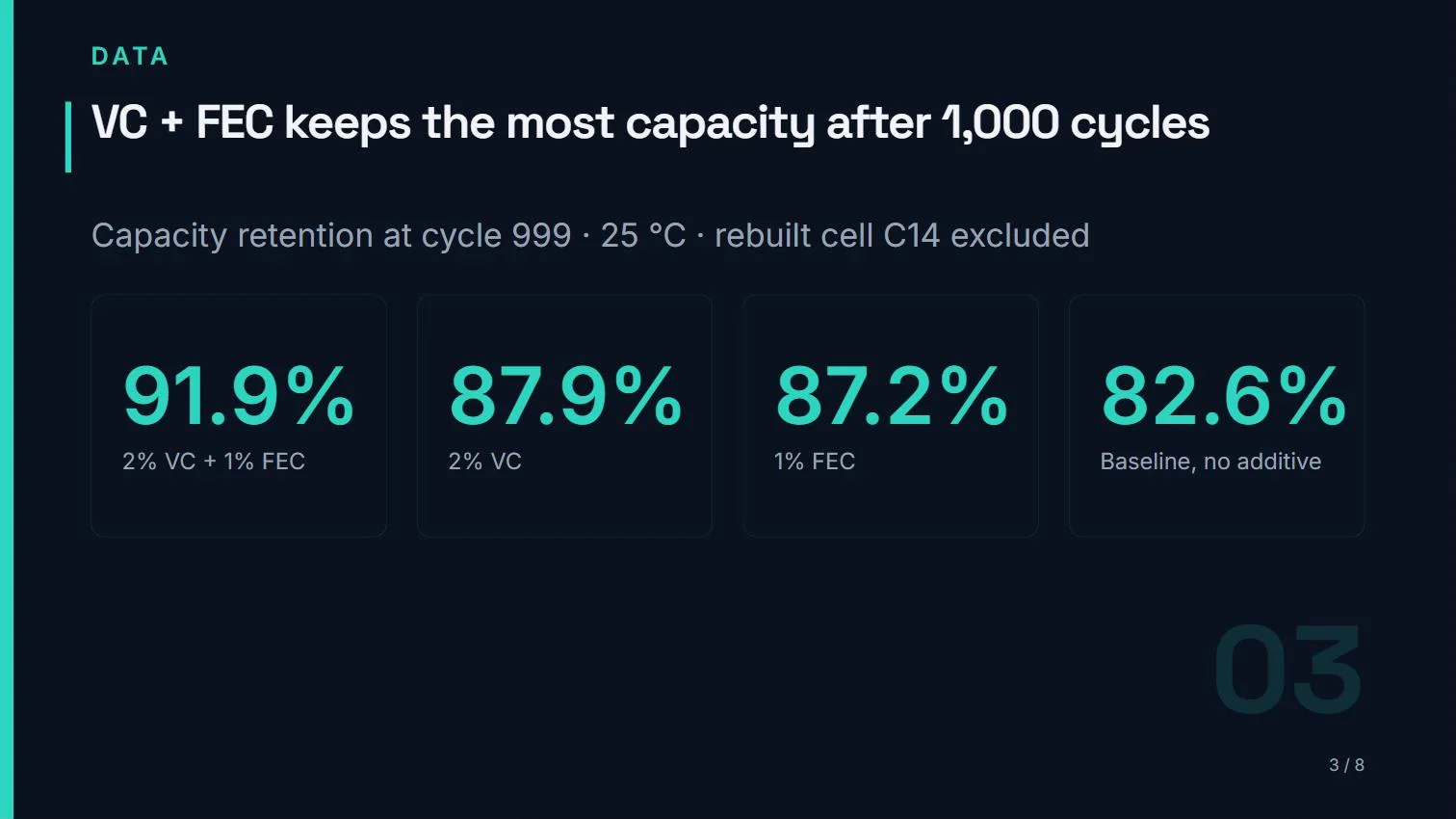
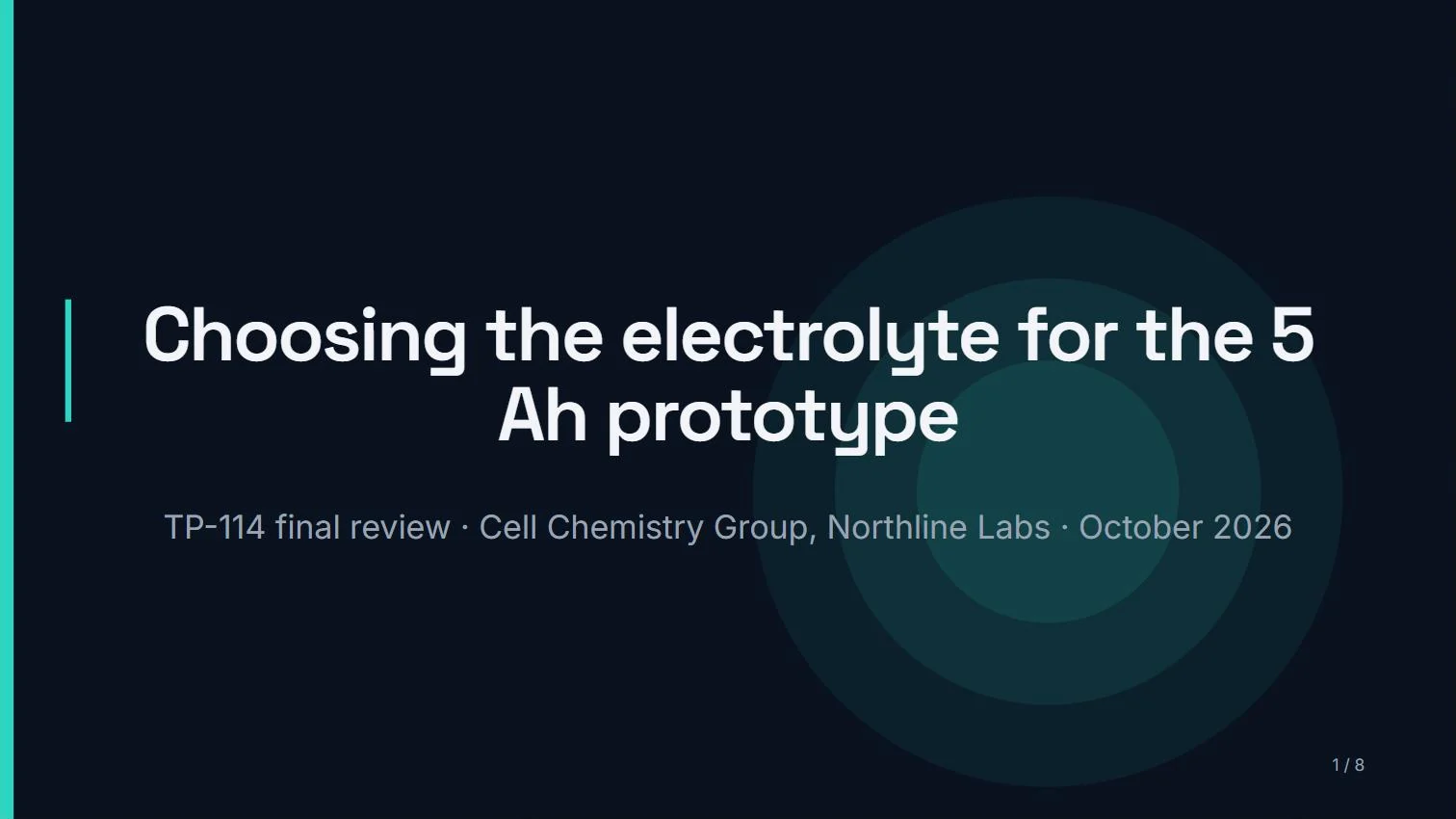
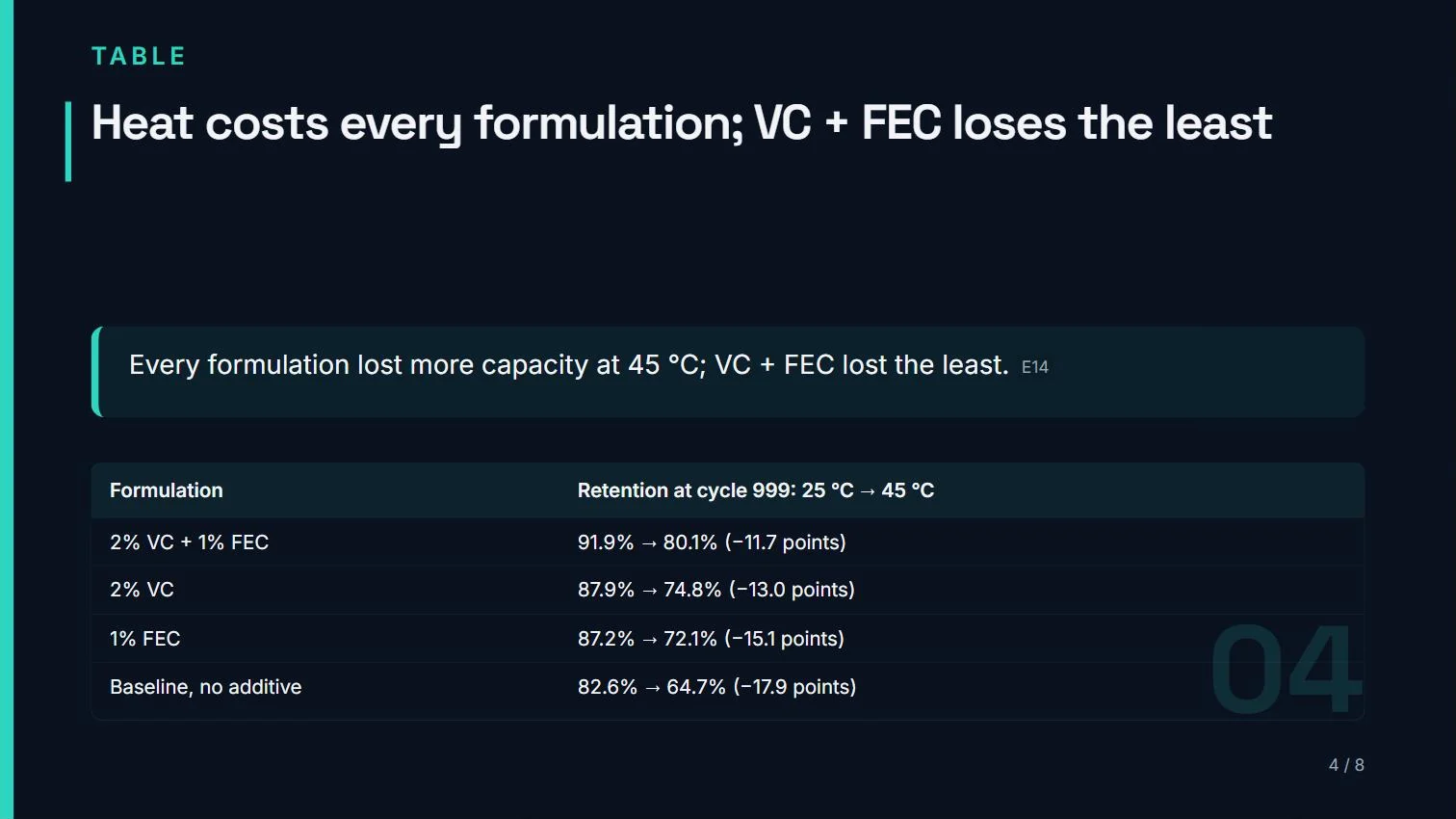
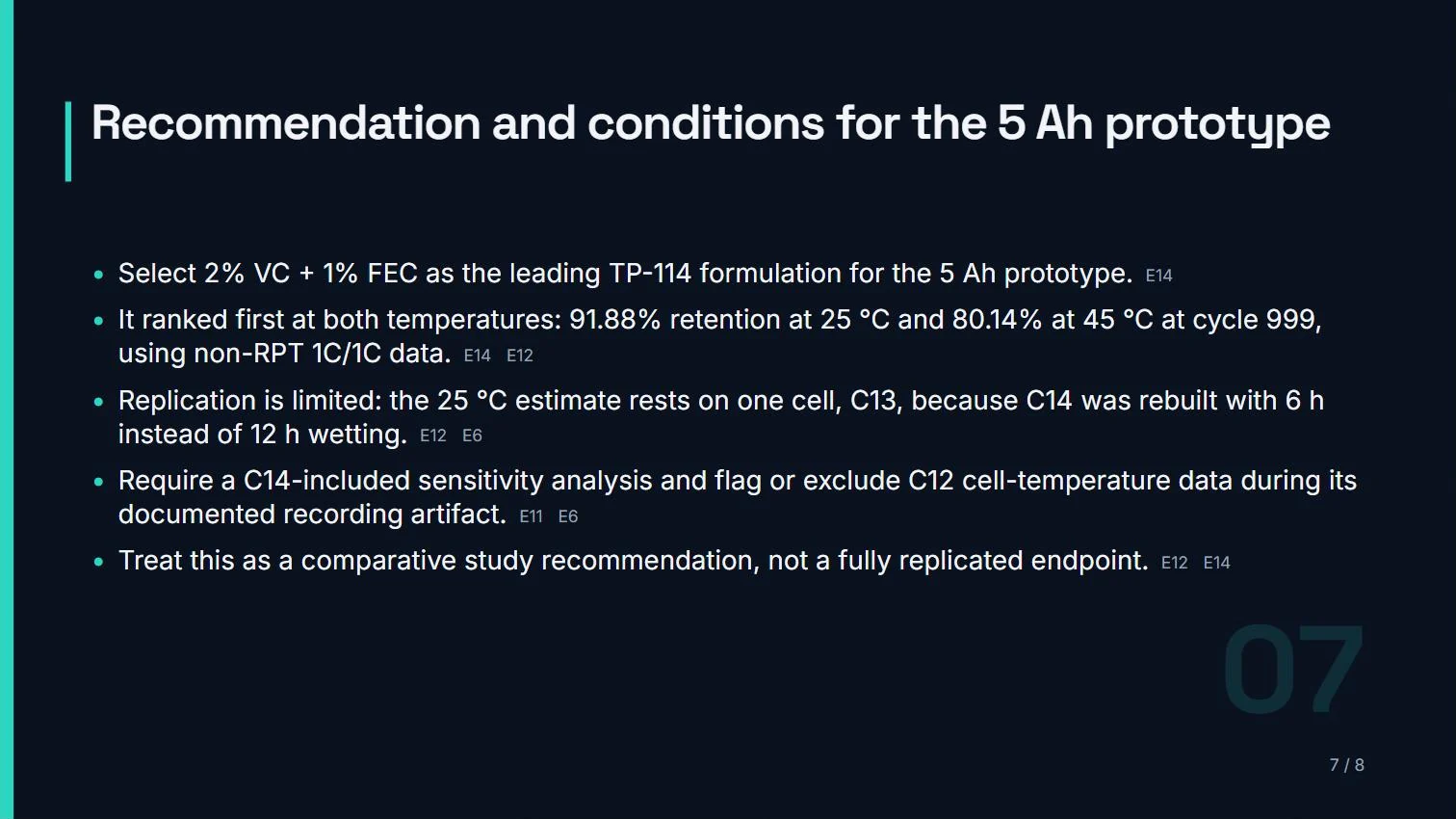
Four of the eight slides in the project's review deck, drafted by URIQA and finished in its slide editor.
A sample project built for this page. The cycling data, notes and documents are illustrative; the screens are captured from that project in URIQA. The micrograph above is a published image, credited below.
Image credits
- FIB-SEM section of NMC811 particles: Antonis Vamvakeros and Ronan Docherty, Battery Imaging Library, Zenodo, doi:10.5281/zenodo.17177207, CC BY 4.0
Your next insight may already be in your data.
Start a project with the files you have today.
Free plan · No credit card