

For industry
Professional work with the evidence attached.
URIQA ties every conclusion in your report to the case file, lab result or photo behind it, so the answer to “how do you know?” is one click away.
- R&D and product development
- Testing and QC labs
- Forensic engineers
- Failure analysts
- Materials and metallurgy
- Inspection and testing
- Technical consultants
01From intake to signed report
Built for the question that always comes.
A client, an insurer, an opposing expert: sooner or later someone asks how you know. URIQA keeps the answer attached to every conclusion.
01
Open a case, not a folder.
Intake documents, drawings, lab reports, photos and data in one case, organized from day one, with every deadline in view.
02
Bring evidence from where it lives.
Link files from Google Drive or OneDrive instead of copying them around, with the narrowest access each provider allows.
03
Find the gaps before the other side does.
Agents comb the case for missing records, contradictions and open questions, and show you exactly where they looked.
04
A chain of reasoning you can walk anyone through.
Record findings, weigh competing explanations on the Insight Map, and see at a glance what the evidence supports and what it rules out.
05
Client-ready, on your letterhead.
Draft from templates built for failure analysis and technical consulting, with citations and your branding, then brief the client with an editable deck.
06
Confidential by design.
Encrypted, isolated per workspace, and never used to train AI. Clear, too, about what it is not certified for.
Handling regulated or export-controlled material? Read what URIQA is and isn't certified for →
02A worked example
One broken part. Every conclusion traced.
An e-bike crank arm snaps on a climb. The rider sues. The expert has to say why it failed, and whether anyone could have caught it.
01 · Gather
The whole case file, read together.
Photos of the fracture, the rider's statement, the lab's fractography report, the manufacturer's service bulletin, the shop's work orders and three years of ride logs, in one case and read side by side.
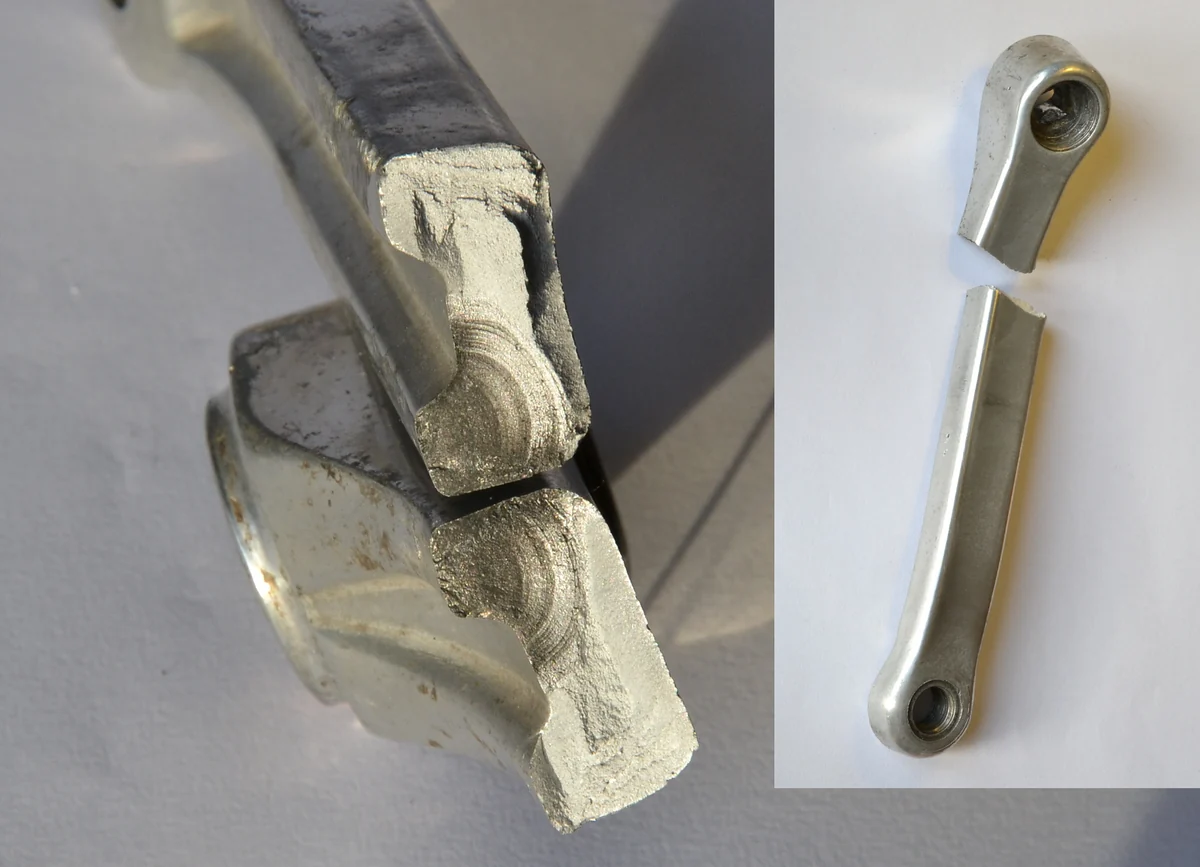
Fracture faces · photograph
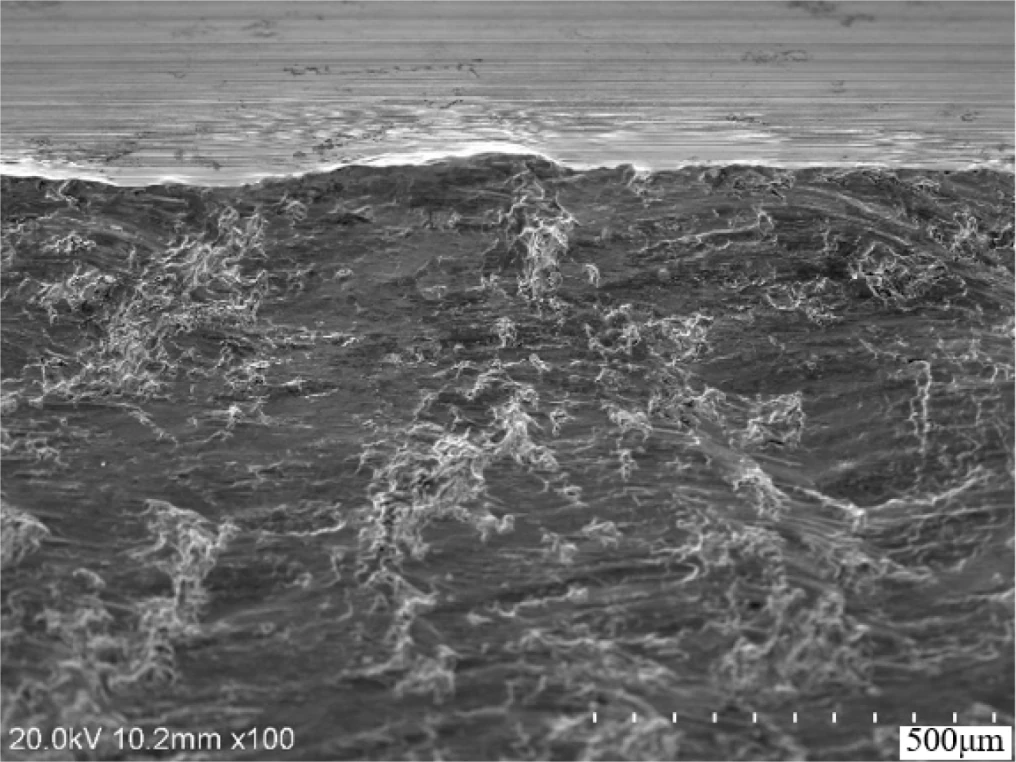
Fatigue origin · reference SEM
Published images stand in for the case photographs here; both are credited below. 02 · Analyze
Name the mechanism. Rule out the rest.
Ask what broke the arm. URIQA reads the lab report, the photograph and the inspection notes together, names the mechanism, and shows which competing explanations the evidence rules out, each with its citation.
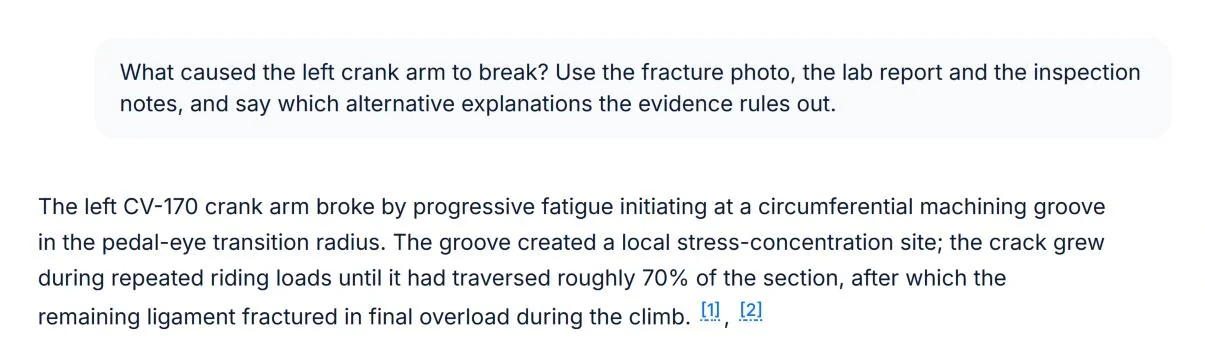
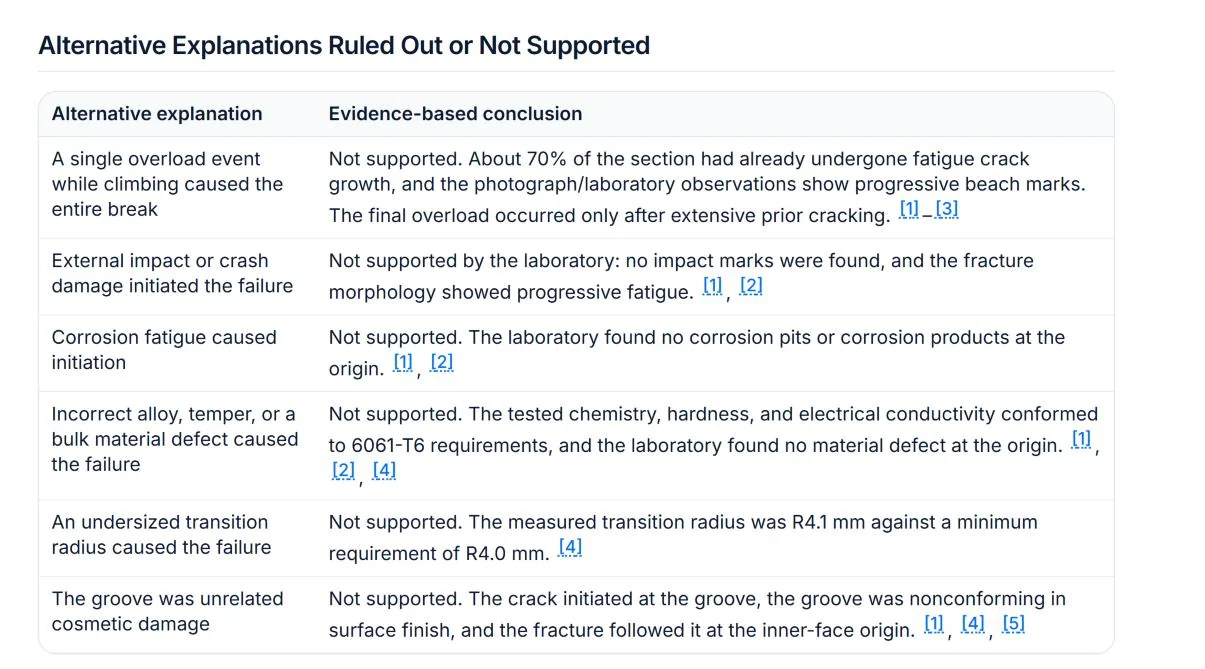
Six alternative explanations, each tested against the record. 03 · Trace
Follow the paper trail.
The broken arm was in the bulletin's affected lots and went in for service twice after the bulletin was issued. Neither work order records the inspection the bulletin required.
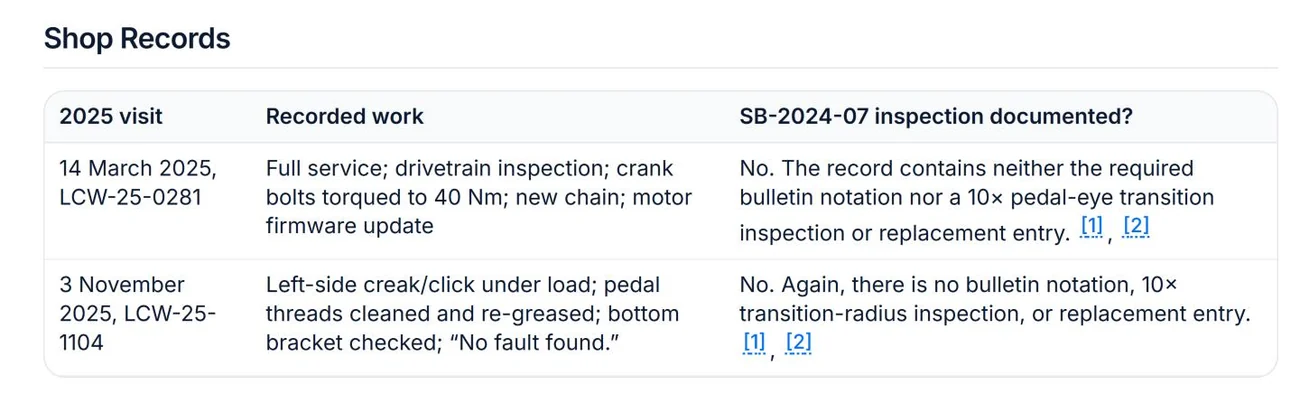
Read from the shop's work orders and checked against the bulletin, with both cited. 04 · Argue
Weigh every explanation at once.
The Insight Map lays out each candidate cause with the evidence for and against it, quoted from the source files, so anyone can see why one explanation stands and the others fall.
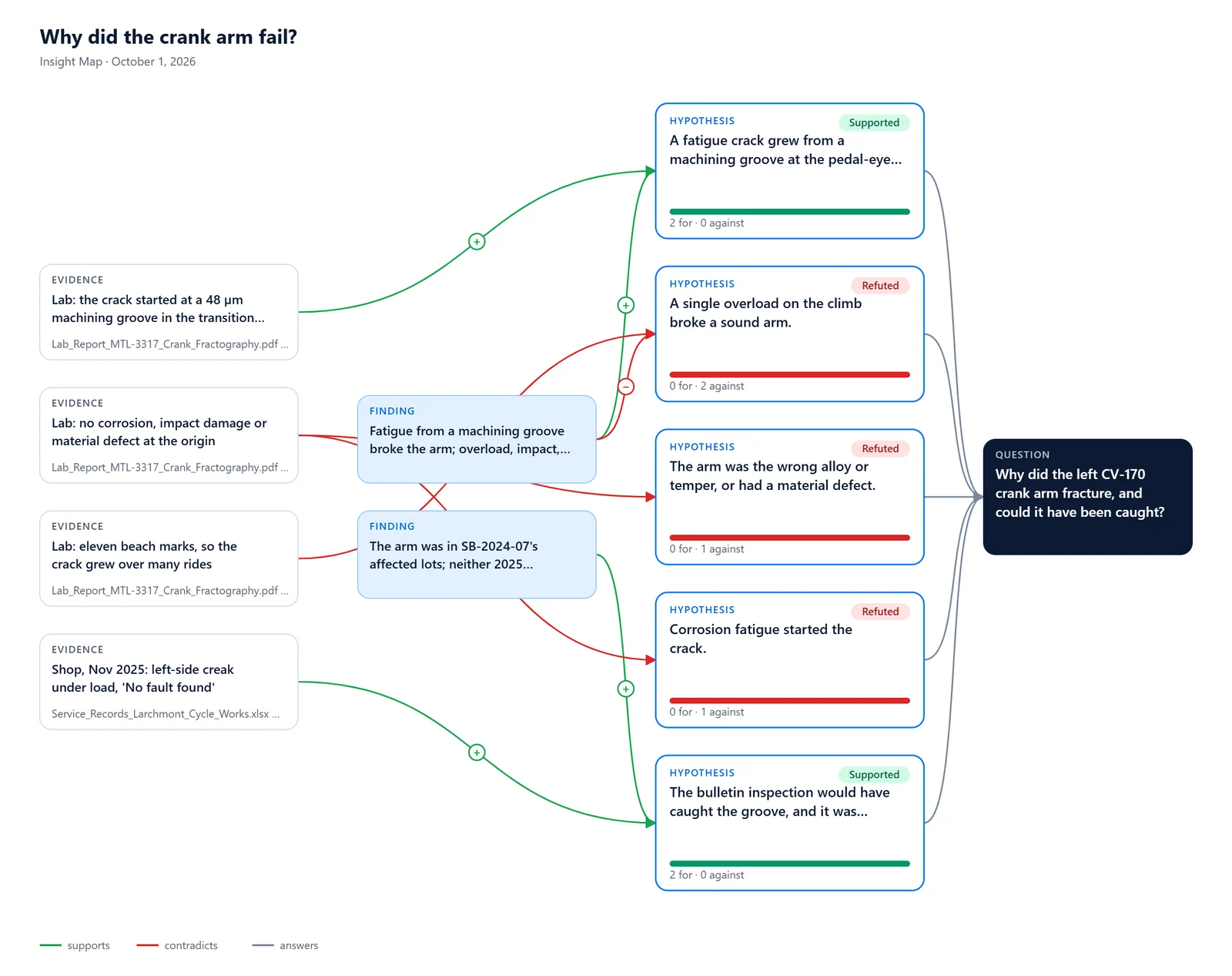
Two explanations supported, three refuted, each verdict tied to its evidence. 05 · Deliver
Make the court's date.
The case plan works back from the disclosure deadline. URIQA shows which chain of work decides whether the report makes it, marks what is still waiting on something else, and flags anything that should already have started.
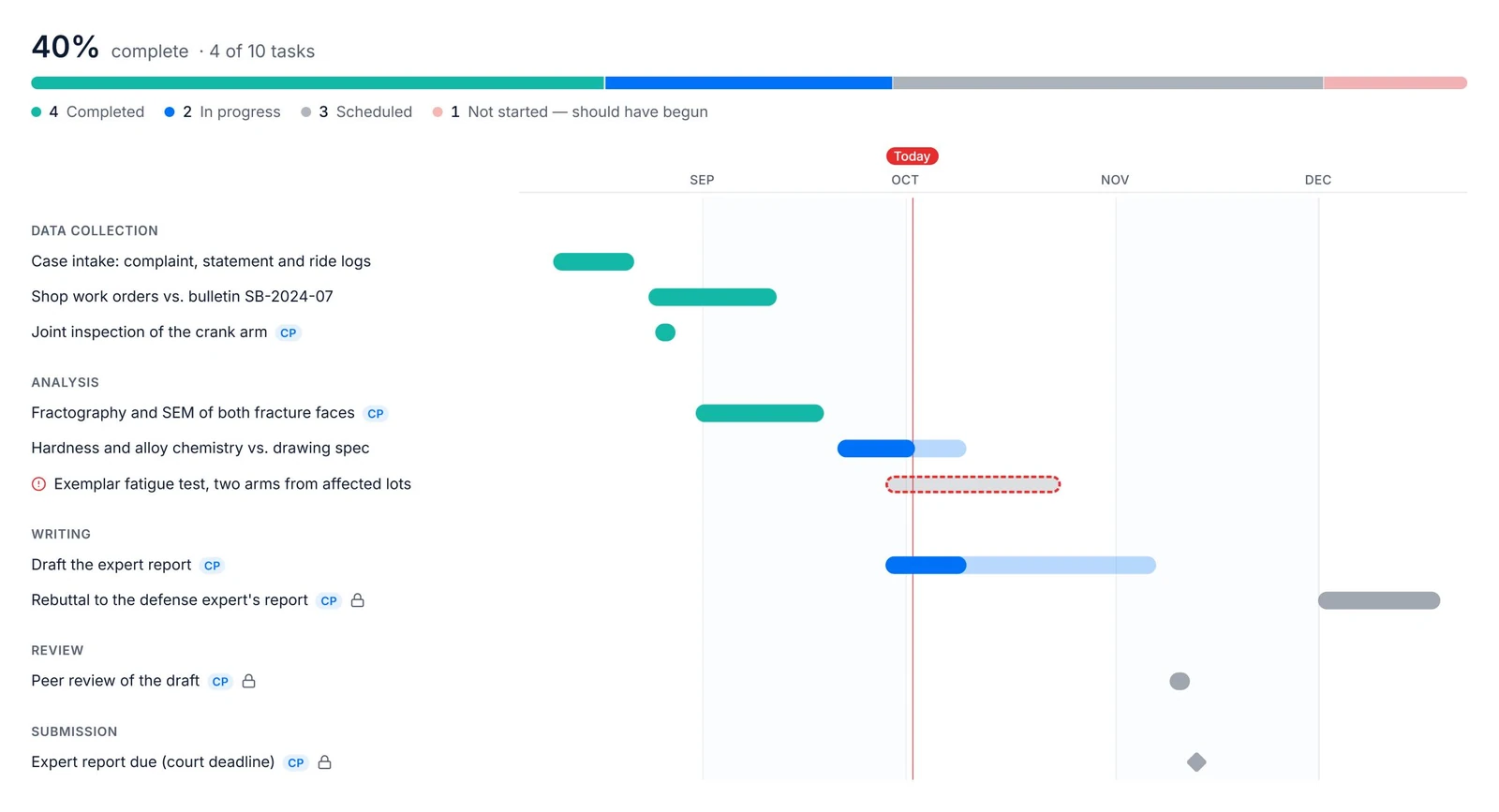
The disclosure deadline on the critical path, and the late-starting fatigue test flagged in red.
A sample case built for this page. The people, companies, records and lab results are fictional; the screens are captured from that case in URIQA. The photograph and the micrograph are published images, credited below.
URIQA drafts. You sign.
Final opinions stay yours. URIQA organizes the evidence, runs the analysis and drafts the report; you review, decide and put your name to it.
Image credits
- Fractured crank arm: Oxensepp, File:0x-kurbel-def.jpg, Wikimedia Commons, CC BY-SA 3.0
- Fatigue origin below a machined surface: Pan et al., Materials 18 (2025) 3747, Fig. 6a, cropped, doi:10.3390/ma18163747, CC BY 4.0
Make every conclusion easier to stand behind.
Start with one case. Follow every conclusion back to its evidence.
Free plan · No credit card